Platform Validation Cases

5 Tier-III Hospitals · 5 Indications · 5 Formulation Types — Full-stack validation of the ΞSyn Labs delivery platform
5
Hospital Partners
5
Indications Validated
3
National Grants
CoQ10 Transdermal Nanovesicles
Nanovesicle + hyaluronic acid hydrogel synergistic delivery system. Overcomes the industry challenges of poor CoQ10 transdermal penetration and short local retention, achieving follicle-targeted delivery with sustained local residence.
TechnologyNanovesicles + Hydrogel
Partner HospitalThe Sixth Affiliated Hospital, Sun Yat-sen University
FundingNational Natural Science Foundation of China
16.6×
Local Bioavailability Improvement
>5×
Transdermal Efficiency Improvement
>85%
Encapsulation Efficiency · Stable PDI
4 wks
Continuous Human Use Validation
Mechanism
Liposome
Encapsulation
Nanovesicle
Stratum Corneum
HA Hydrogel
Local Retention
Follicle-Targeted
Sustained Release
Dual-component synergy: Liposomes/nanovesicles handle encapsulation and transdermal penetration; bio-based materials (hyaluronic acid) provide local retention, moisturization, and sustained release. Full-chain control from "stable encapsulation" to "transdermal retention."
Experimental Validation
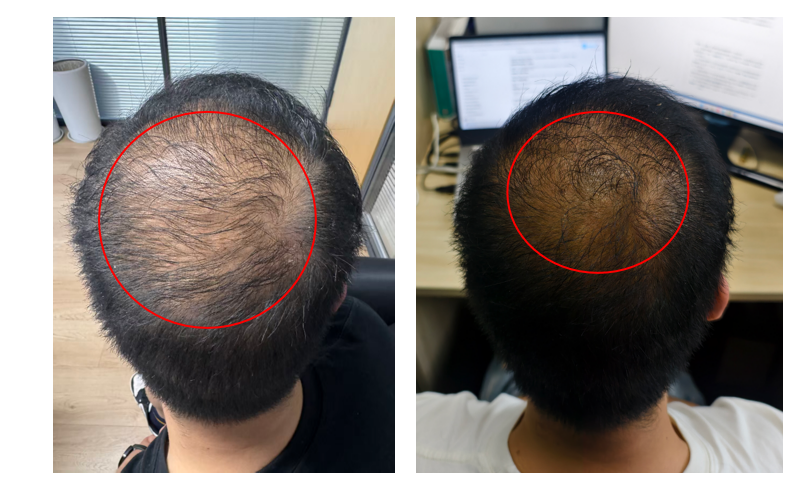
Before/after human use
Human Validation: 4-Week Continuous UseVisible improvement in thinning area coverage, significant user-perceived effect.
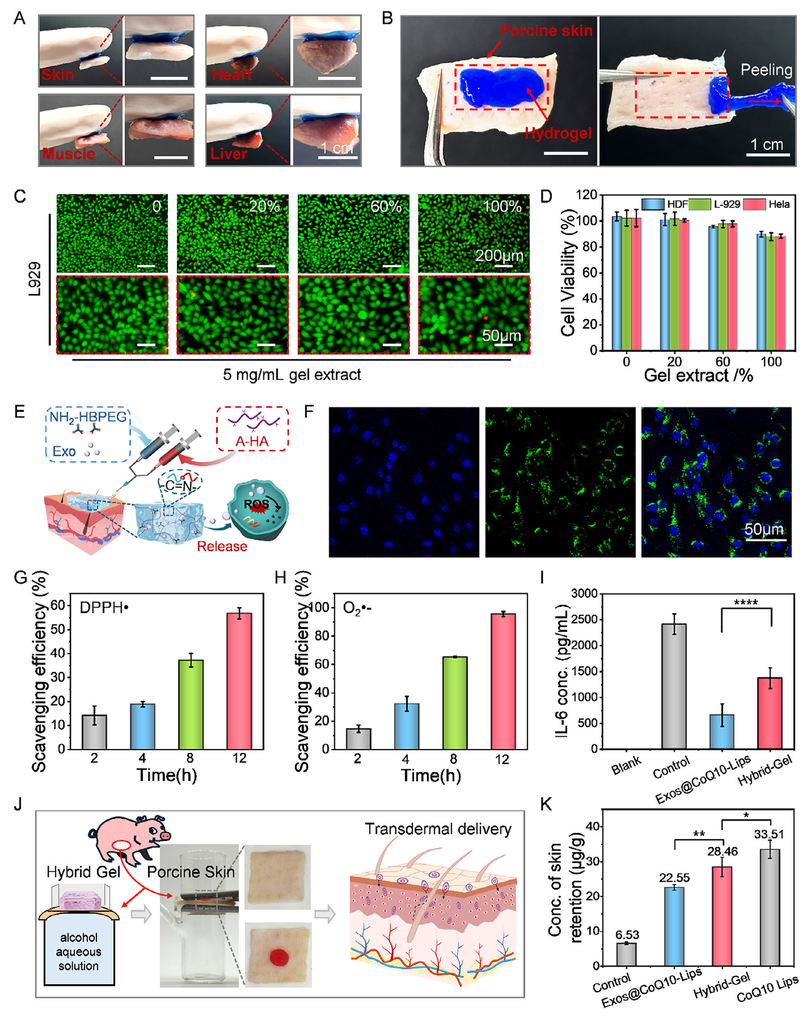
Hydrogel performance characterization
Comprehensive Hydrogel CharacterizationTissue adhesion, biocompatibility, antioxidant (DPPH ~55%, superoxide ~95%), anti-inflammatory (IL-6 reduction), transdermal retention.
38.9 μg/g
Optimal skin retention
16.6× vs control
55%
DPPH radical scavenging
Sustained at 12h
~95%
Superoxide anion clearance
Near-complete at 12h
Dual-Domain Living Particle Gel
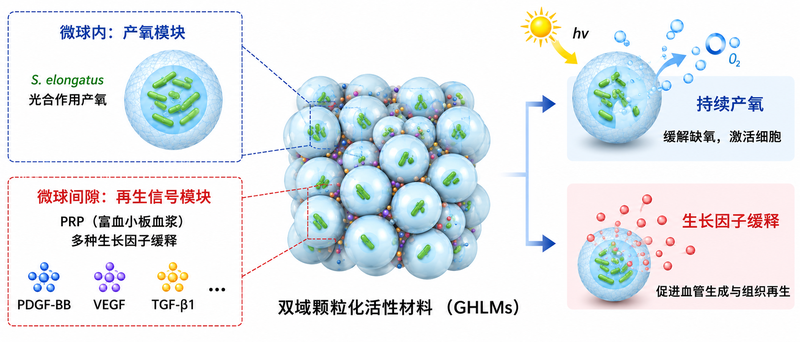
S. elongatus living microalgae + PRP regenerative signals — intra-particle oxygen supply, inter-particle growth factor delivery, synergistically resolving the dual challenges of persistent hypoxia and burst-release in diabetic chronic wounds.
TechnologyParticle Gel / Living Material
Partner HospitalZhongshan Hospital, Fudan University
FundingNational Key R&D Program — Synthetic Biology
~90%
Day 12 Wound Closure
+20%
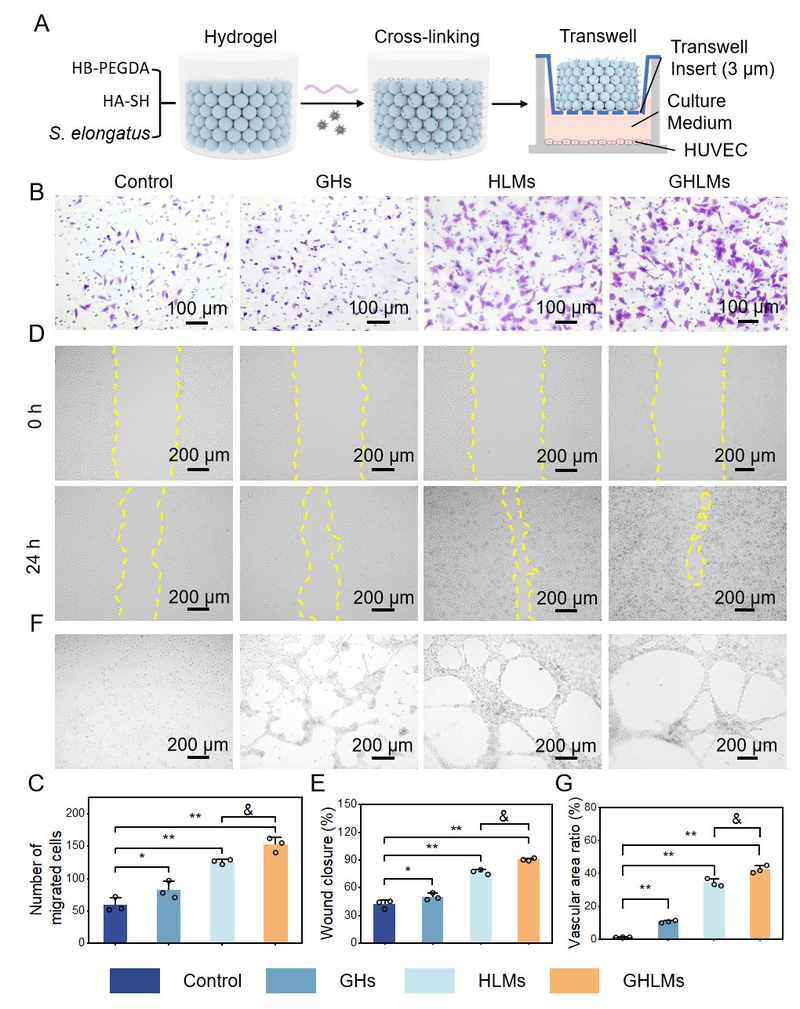
Fibroblast Migration Increase
~2×
Vessel Area Ratio Increase
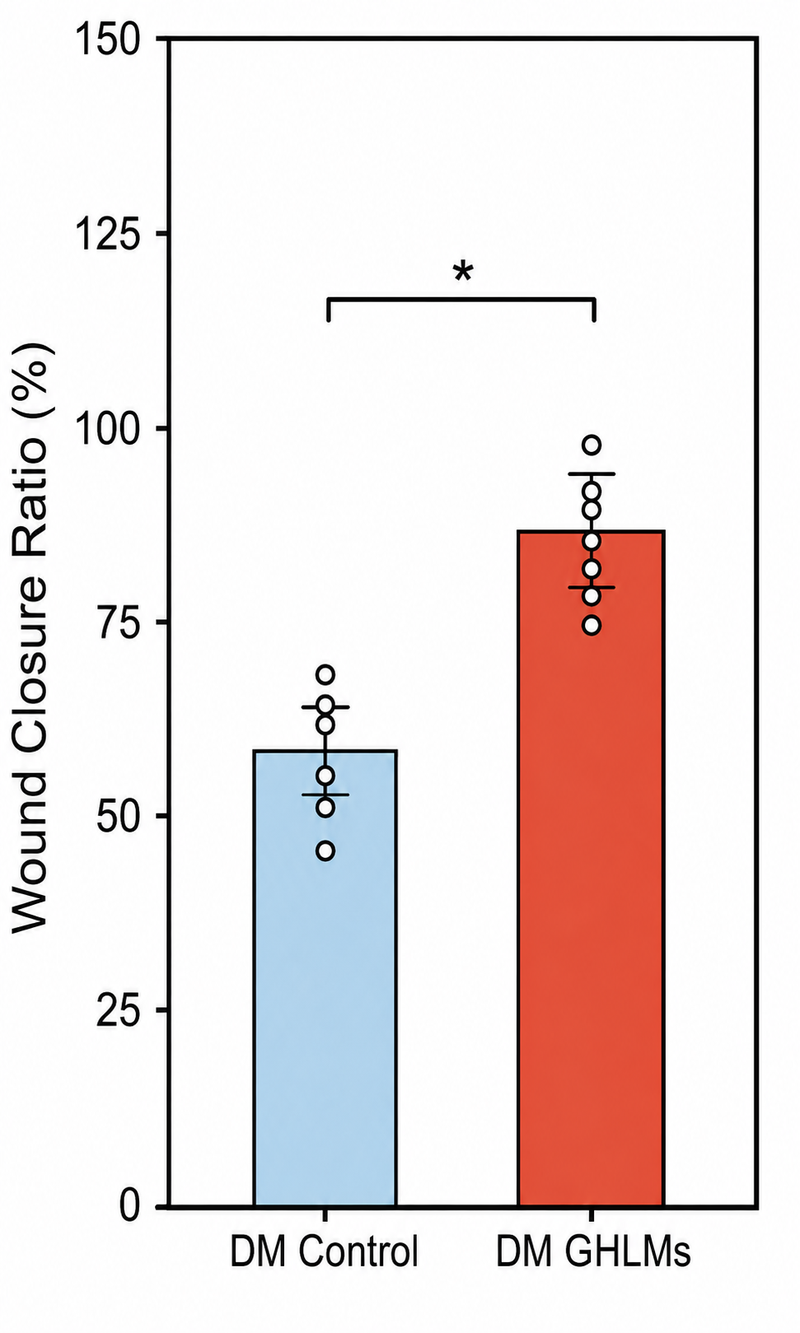
85%
Wound Closure Rate
vs DM Control 58%
Mechanism
Intra-particle
S. elongatus
Light-Activated
Sustained O₂
Inter-particle
PRP GF Release
Angiogenesis
Tissue Regeneration
Dual-domain design: Photosynthetic microalgae (S. elongatus) encapsulated within microparticles provide light-driven, sustained O₂ production to reverse the hypoxic microenvironment. PRP loaded in inter-particle spaces releases PDGF-BB, VEGF, TGF-β1, and multiple other growth factors, synergistically promoting vascularization and wound closure.
Experimental Validation
GHLMs structure and function
GHLMs Dual-Domain ArchitectureIntra-particle O₂ module (S. elongatus) + inter-particle regenerative signal module (PRP → PDGF-BB / VEGF / TGF-β1).
HUVEC functional assays
Endothelial Cell Functional ValidationMigration, scratch wound healing, and tube formation assays — GHLMs significantly outperformed all controls (Control / GHs / HLMs).
In Vivo Efficacy
Day 0-12 wound healing
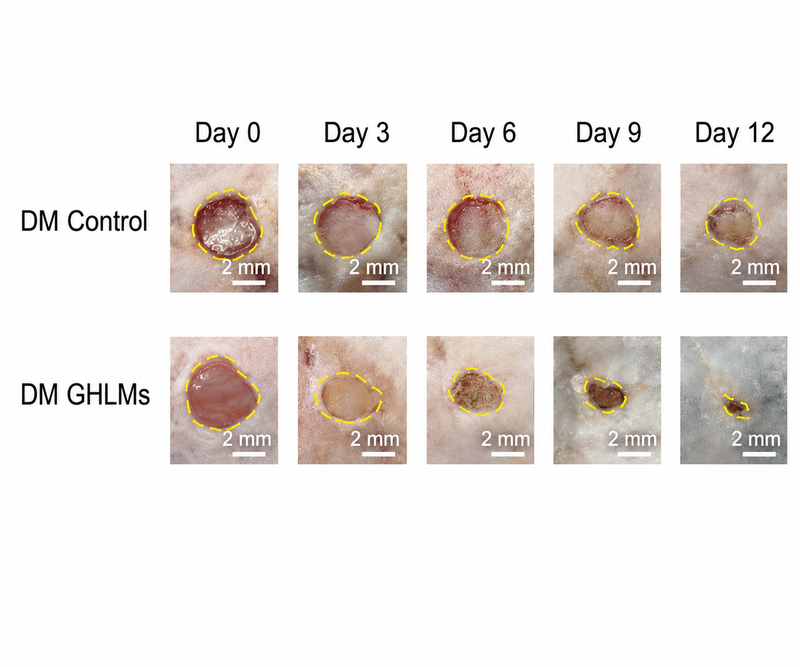
STZ-Induced Diabetic Mouse Wound ModelDay 0→12 healing progression. GHLMs group achieved near-complete wound closure by Day 12, while DM Control retained a large unhealed wound area.
Wound closure quantification
Wound Closure QuantificationDM GHLMs ~85% vs DM Control ~58%, statistically significant (*p<0.05).
Injectable Exosome Microspheres
HMP microspheres loaded with miR-29a exosomes — microfluidic fabrication of uniform microspheres, RGD-targeted bone lesion localization, 28-day sustained release, synergistically driving osteogenesis and angiogenesis.
TechnologyExosome + HMP Microspheres
Partner HospitalNanjing First Hospital
FundingNational Natural Science Foundation of China
14.3×
Osteogenic Gene Upregulation
2.3×
Angiogenic Protein Increase
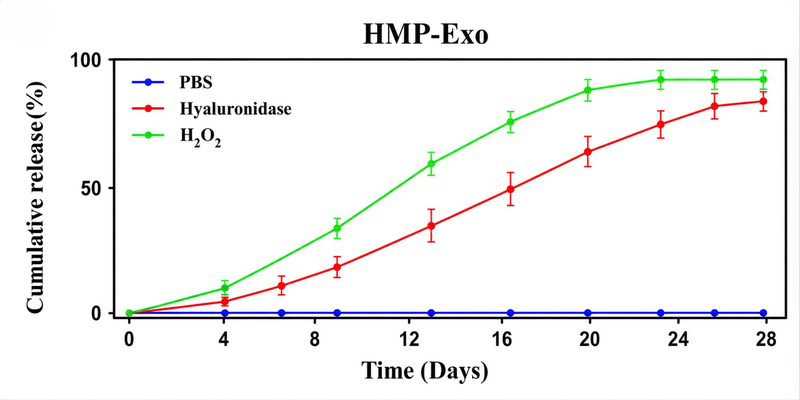
28 days
Sustained Release Period
−82%
HDAC4 Suppression
Mechanism
Microfluidic
Droplet Fabrication
HMP Microspheres
RGD Targeting
Injection into
Bone Lesion
miR-29a
Osteo + Angio
Dual-responsive release + bone-vascular synergy: RGD peptides on HMP microsphere surfaces target BMSCs and HUVECs. Microspheres respond to pathological microenvironments (hyaluronidase / ROS) for sustained exosome release. miR-29a-3p enters cells → inhibits HDAC4 → upregulates Runx2 → drives osteogenic differentiation (ALP / COL1 / OCN / BMP2) and angiogenesis (VEGF).
Experimental Validation
Rat fracture repair
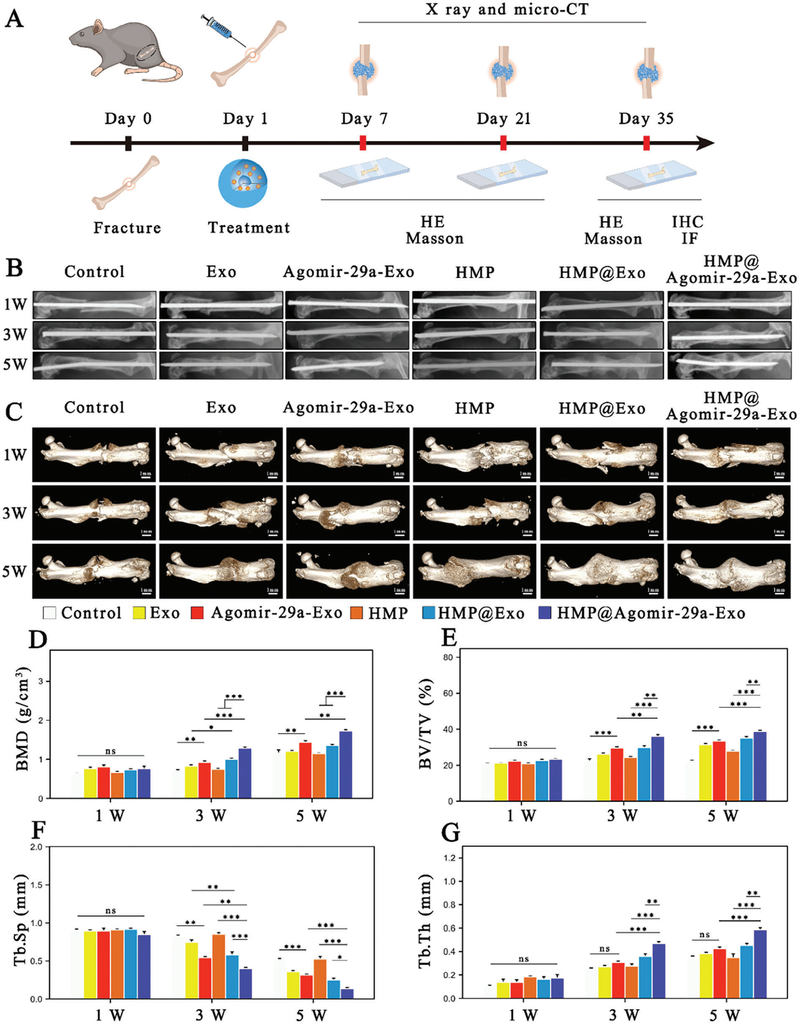
Rat Fracture Model Repair AssessmentX-ray + micro-CT imaging follow-up (1/3/5 weeks). HMP@Agomir-29a-Exo group showed near-complete fracture healing at 5 weeks, with BMD, BV/TV, and Tb.Th significantly superior to all controls.
28-day release kinetics
HMP-Exo 28-Day Cumulative ReleaseHyaluronidase group: ~82% release at 28 days; H₂O₂ group: ~95% at 20 days. Near-zero leakage in normal PBS — dual-responsive to pathological microenvironments.
+26%
5-week BMD increase
vs HMP@Exo
+12%
5-week BV/TV increase
New bone volume fraction
+13%
6h vessel length increase
Vessel node increase
NO-Responsive Probiotic Microcapsules
γ-PGA hydrogel microcapsules encapsulating Lactobacillus acidophilus — gastric acid-resistant, intestinal NO-triggered release, simultaneously restoring the intestinal barrier, modulating the microbiota, and reducing inflammation.
TechnologyMicrocapsule / Microgel
Partner HospitalThe First Affiliated Hospital of USTC
FundingNational Key R&D Program — Synthetic Biology
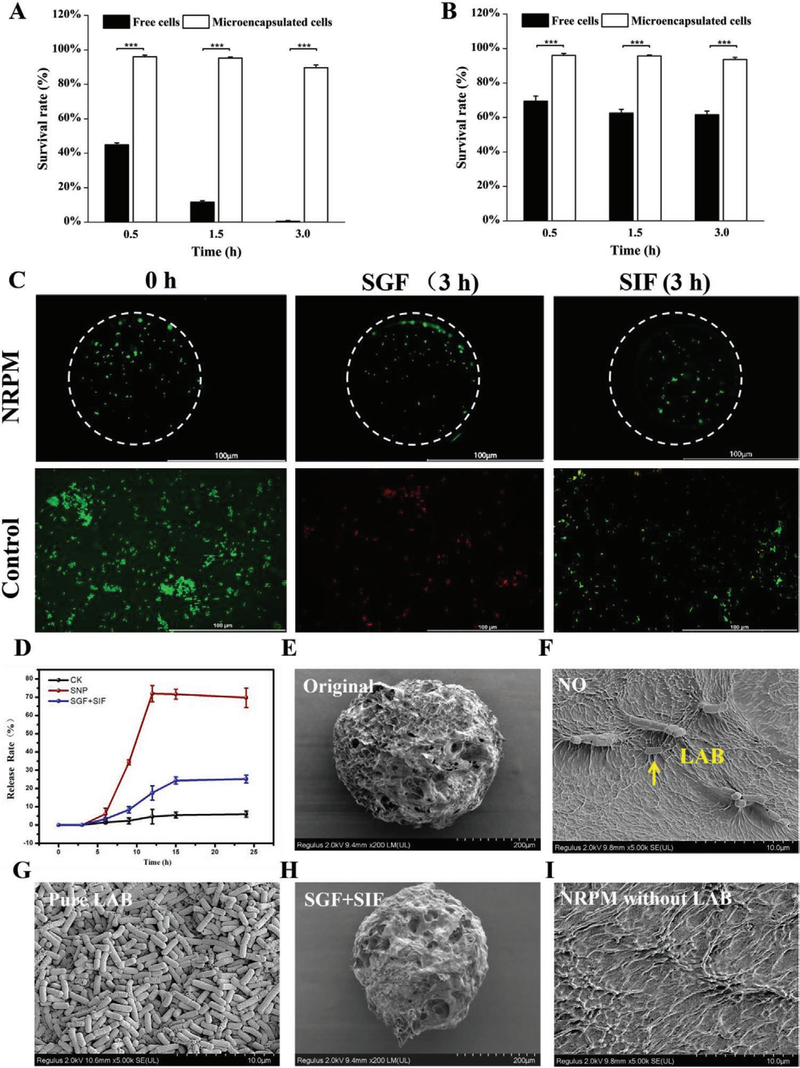
89.67%
SGF 3h Survival
Free bacteria: 0%
93.67%
SIF 3h Survival
Free bacteria: 61.60%
67.86%
NO-Triggered 12h Release
No NO: only 4.64%
6.0×10⁸
cells/mL
High-Density Encapsulation
Mechanism
Microfluidic
Encapsulation
γ-PGA Shell
Gastric Resistance
Intestinal NO
Triggered Release
Microbiota Modulation
Barrier Repair
Oral→Stomach→Intestine three-stage delivery: Uniform γ-PGA microcapsules fabricated by microfluidics. The acid-resistant shell protects probiotics through the stomach. Upon reaching inflamed intestinal sites, the capsules respond to locally elevated NO for precise release. Released probiotics colonize the intestinal epithelium, restoring barrier function + optimizing microbiota + reducing inflammatory cytokines.
Experimental Validation
Probiotic encapsulation validation
Encapsulation Performance ValidationSGF/SIF survival rates, live/dead fluorescence staining, SEM morphology — microcapsules maintained structural integrity, survival significantly exceeding free bacteria.
Intestinal barrier and microbiota
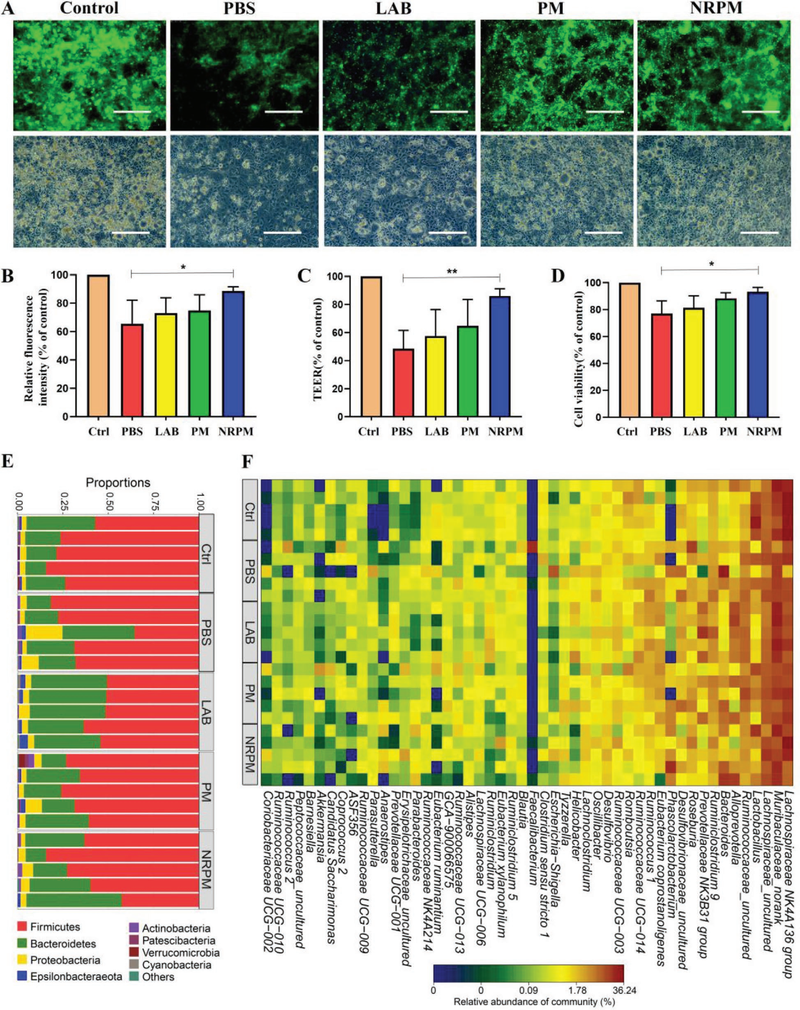
Barrier Repair + Microbiota ModulationTEER recovery to ~85%, cell viability ~90%. Phylum/genus-level analysis: NRPM group microbiota most closely resembled the normal control.
In Vivo Efficacy
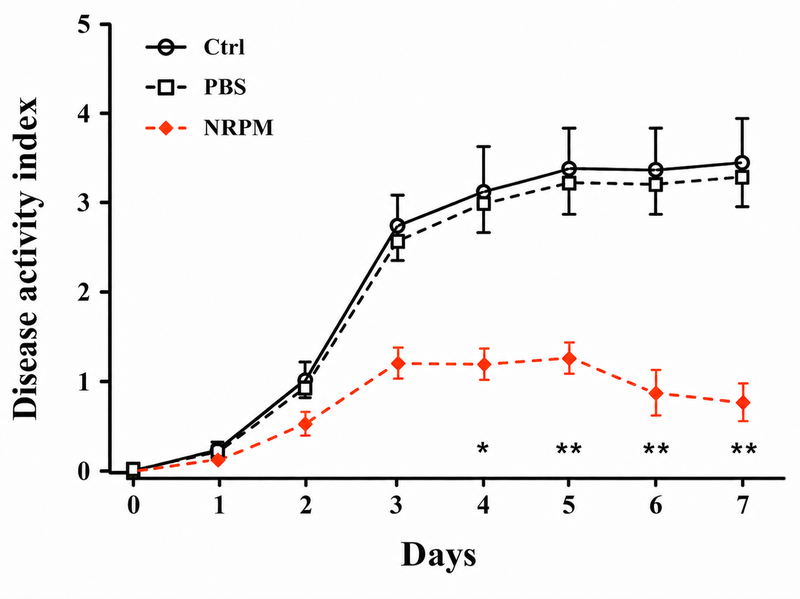
Disease activity index
Disease Activity Index (DAI)NRPM group peak DAI only ~1.3 (vs Ctrl/PBS ~3.3), declining to 0.8 by Day 7 — disease progression significantly suppressed.
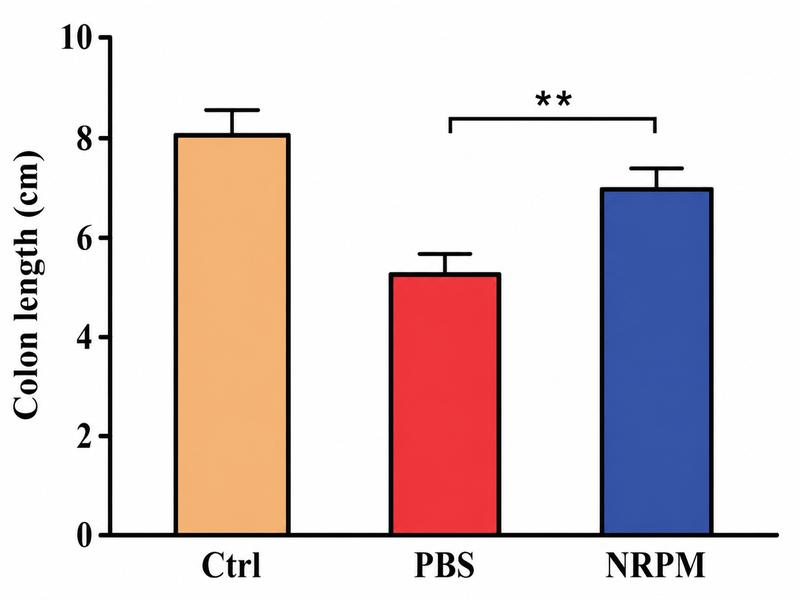
Colon length
Colon Length RestorationNRPM group ~6.9cm vs PBS ~5.2cm (**p<0.01), colon shortening significantly alleviated.
Cardiac-Targeted nano-MaR1
PEGylated liposomes encapsulating Maresin 1 — enriched in ischemic myocardium after IV administration, alleviating post-MI microvascular obstruction (MVO) and reducing infarct size.
TechnologyTargeted Liposomes
Partner HospitalNanjing Drum Tower Hospital
StatusIn Development
PEG
Long-Circulating Liposomes
Extended half-life
MaR1
Pro-Resolving Mediator
Myocardial targeting
MVO
Microvascular Obstruction
Core post-MI challenge
IV
Intravenous Administration
Systemic delivery
Mechanism
PEG Liposome
Encapsulating MaR1
IV Injection
Long Circulation
Ischemic Myocardium
Passive Targeting
MVO Alleviation
Infarct Reduction
Clinical challenge: MaR1 is inherently unstable and rapidly degraded, making precise myocardial lesion targeting difficult. Post-MI microvascular obstruction (MVO) currently lacks effective interventions. PEGylated liposomal delivery enhances MaR1 stability, prolongs circulation time, improves lesion targeting efficiency, and significantly reduces infarct size and inflammatory infiltration.
Delivery Challenges
· MaR1 chemical instability
· Extremely short free-drug half-life
· Poor myocardial lesion enrichment
· No effective MVO intervention
Liposomal Solution
· PEGylation extends circulation
· Nano-size enables passive ischemic targeting
· Protects MaR1 from degradation
· Reduces infarct size + alleviates MVO

Platform Capability Matrix

ProductFormulationRoutePartner HospitalKey Metric
CoQ10 TransdermalNanovesicles + HydrogelTransdermal · FollicleSYSU 6th Hospital16.6× Bioavailability
Dual-Domain GelLiving Microalgae + PRPLocal Injection/TopicalZhongshan Hosp. FudanDay 12 Closure ~90%
Exosome MicrospheresHMP + miR-29aIn Situ InjectionNanjing First HospitalOsteogenic ↑14.3×
NO-Responsive MCγ-PGA MicrocapsulesOral · NO-TriggeredUSTC 1st HospitalGastric Survival 89.67%
nano-MaR1PEG LiposomesIV · SystemicNanjing Drum TowerMVO Alleviation

Encode · Form Factor
Nanovesicles · Liposomes · Microspheres · Microcapsules · Particle Gels — 5 formulation types covering transdermal/oral/injectable/topical all administration routes.
Screen · Targeting Validation
Follicle · Bone Lesion · Colitis Site · Ischemic Myocardium — 4 targeting strategies validated from cell to animal to human.
Manufacture · Translation
Microfluidic scale-up · Continuous flow · 5 hospital validations · 3 national grants — a replicable path from bench to bedside.